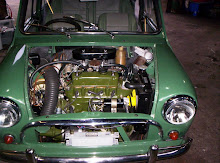
In the neck of the suction chamber that forms the upper part of the carburettor is a small hydraulic damper, consisting of a piston, fitted with a one-way valve and working

Topping-up the carburettor piston damper
in an oil-tilled recess in the top of the carburettor piston rod. The resistance created by oil flowing past the small damper piston prevents the carburettor piston rising too quickly when the throttle is suddenly opened. This would cause an unduly weak mixture, since the flow of petrol from the carburettor jet always tends to lag behind the flow of air through the carburettor. Consequently, if the damper chamber contains insufficient oil, a "flat spot" will be experienced when the throttle is opened suddenly and the engine may spit back when full acceleration is demanded. The hydraulic damper also prevents the piston "fluttering" under certain running conditions.
It should be a routine matter, therefore, to check the level of the oil in the dashpot when going around the other items with the oil can filled with SAE 20 oil.
On no account use thin machine oil, which is suitable only to lubricate the piston rods of earlier types of S.U. carburettors which did not have oil dashpots. The point is stressed because some garage mechanics do not seem to be aware of the distinction. If the performance is sluggish or "spitting back" occurs when the throttle is suddenly opened and the engine is at its normal operating temperature, check that the right grade of oil has been used in the dashpot.
In Fig. 6 the damper rod has been removed. If the oil filler cap has an air-vent hole drilled in it, the oil level should be about \ in. above the top of the hollow piston rod. If there is no vent hole in the filler cap, the oil level should be \ in. below the top of the hollow rod.